Thinking About Tapping into Your 401(k) To Buy a Home? Read This First.

Lately, headlines have floated an eye-catching idea about tapping into your 401(k) to cover a down payment on a home. Maybe you've caught the buzz and wondered whether that money could get you into a home faster, especially with affordability as tough as it is.
Here’s what you need to remember. Pulling from your retirement savings is a big decision, so take time to weigh all your options first and be sure to talk with a financial expert before you do anything.
A lot of buyers ask if they can use retirement money for a down payment. The short answer is: sometimes. The better answer is: there are a few different ways to do it, and they are not all the same.
1. 401(k) loan (borrowing from yourself)
If your employer plan allows it, this is usually the cleanest option. You borrow from your own 401(k), typically up to 50% of your vested balance or $50,000, whichever is less. There is generally no income tax and no 10% penalty as long as you repay it on schedule. The interest you pay goes back into your own account.
Two things to watch:
- If you leave your job before the loan is paid off, the remaining balance can become taxable.
- Some plans allow a longer payoff period when the loan is used to buy a primary residence.
2. 401(k) hardship withdrawal
Some plans allow a withdrawal for costs tied to buying a principal residence. This is not a loan. You do not pay it back. You will usually owe income tax, and if you’re under 59½ the 10% penalty often still applies. There is no special first-time homebuyer penalty exception for 401(k)s.
3. IRA first-time homebuyer exception
IRAs work differently. You generally cannot take a loan from an IRA, but first-time buyers (no principal residence in the last two years) may withdraw up to $10,000 penalty-free. A married couple can often use $10,000 each. Traditional IRA withdrawals are still taxable. Roth IRA contributions can usually come out tax- and penalty-free; earnings have extra rules
Why Dipping into a 401(k) Can Be Tempting
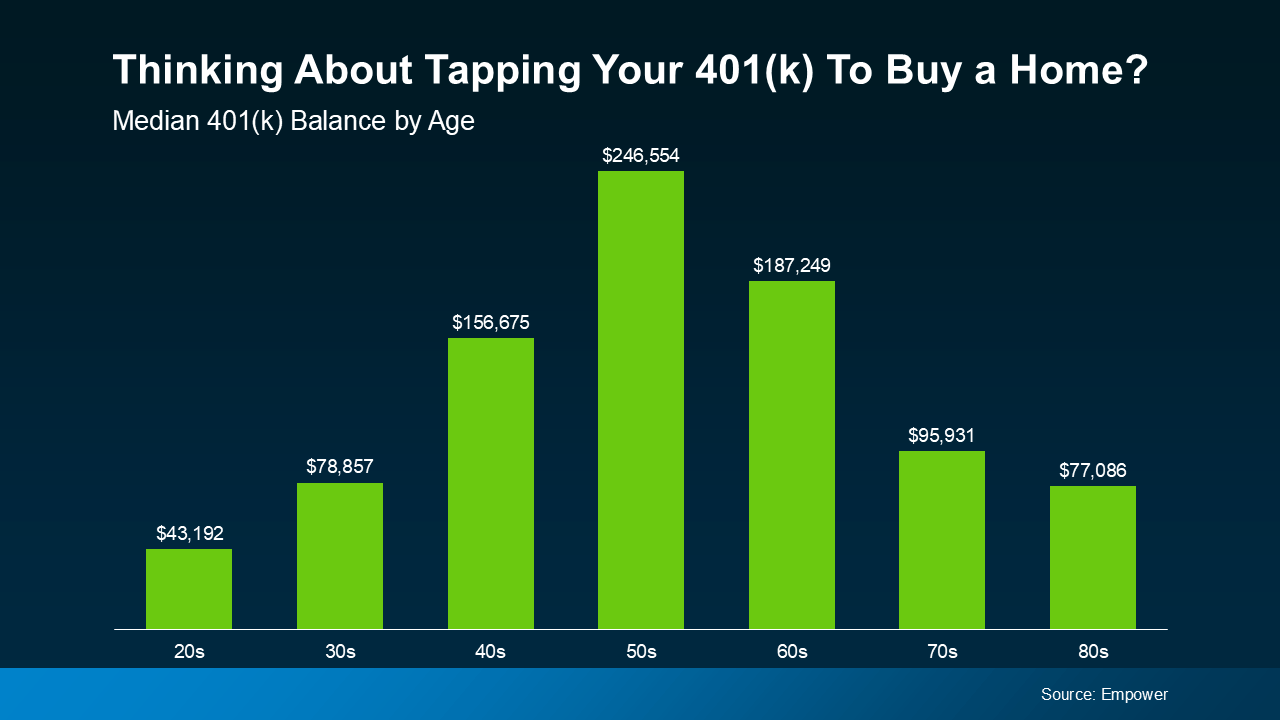
Data from Empower shows many Americans have built up considerable retirement savings. The median 401(k) amount for anyone in their 40s-60s is six figures (see graph below):
And when you've got a good chunk saved and your dream home is right there, reaching for it can feel like an easy call.
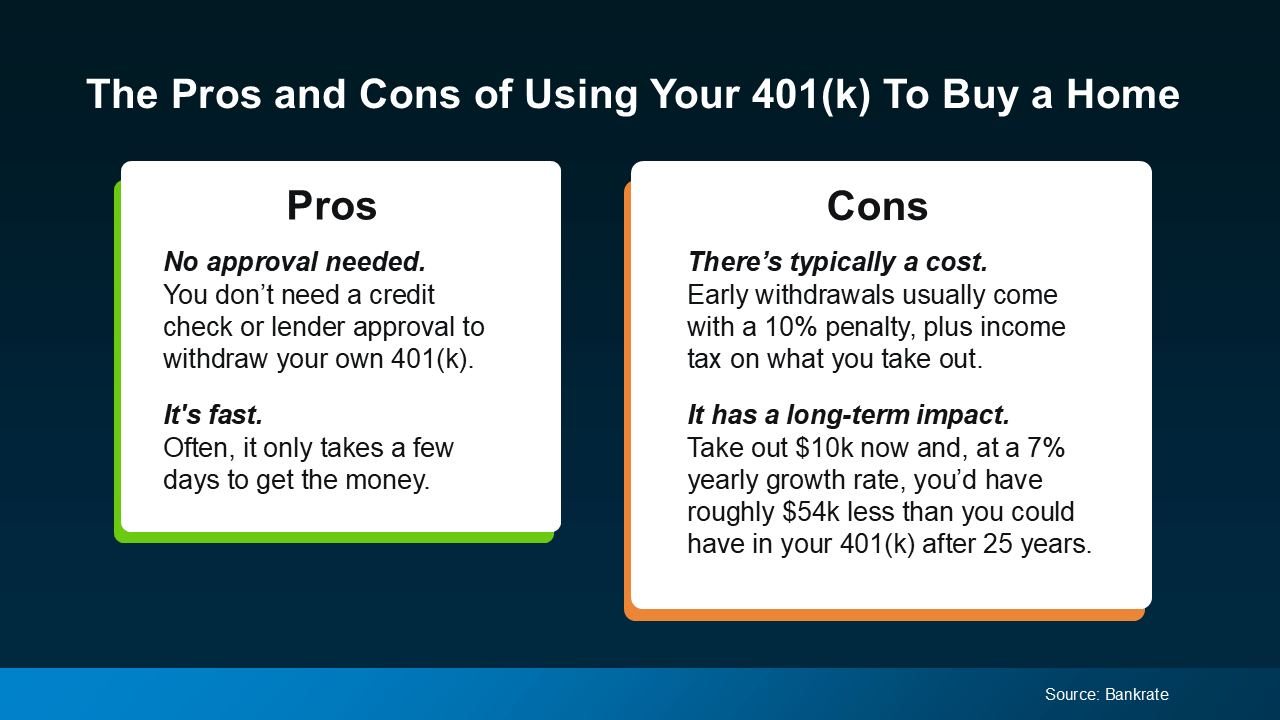
But dipping into your retirement savings to buy a home could cost you a penalty and set back your finances later on so make sure you consult a tax professional and a financial advisor to make sure to do it properly. It is always a good idea to explore alol options for your down payment. As Redfin says:
"If you’re struggling to save enough for a down payment, you may be wondering if tapping into your 401(k) is the right option. While it’s possible, doing so comes with significant risks, like early withdrawal penalties and lost investment growth."
Make a Plan Before You Make a Move
No matter which route you take, talk with a financial expert first. The buyers who come out ahead build a solid plan with the right professionals before starting their journey to homeownership. As NerdWallet puts it:
"Even if you’re convinced a 401(k) loan is the way to go, it’s important to understand the risks at the outset."
Bottom Line
Affordability is definitely a challenge, but that doesn’t mean tapping your 401(k) is your only way in if you want to buy.
If you're considering using your 401(k) savings for a down payment, weigh all your options and talk with a trusted financial advisor before you make any decisions. They’ll help you make a plan to fit your goals and your budget.