This May Be the Best Time To Buy a Brand-New Home

December 9, 2025

New home construction today is giving buyers something it feels like they haven't gotten much lately: a real shot at both the home they want and the deal they need. More brand-new options are on the market right now, and builders are rolling out incentives that make these homes more affordable than many people expect.


It’s a combination that doesn’t come around often – and it’s putting buyers in a surprisingly strong position this season. Here’s why this moment matters and why it’s worth partnering with your own local agent to take advantage of it.


1. More New Homes Are Available Now – and That May Not Last


There’s more new construction on the market today than normal. And for buyers, that means:


  • More cutting-edge communities
  • More move-in-ready homes
  • More floor plans to pick from
  • More upgraded designs and modern features


But that variety may not last.


Data from Zonda shows that even though it feels like new homes are popping up just about everywhere, builders have actually started pulling back. The number of starts (that’s when builders break ground) has been slowly but steadily declining over the past few years. And that’s good because it prevents overbuilding nationally.


But here’s the real insight that can give you an edge. Forecasts show that slight downward trend should continue next year (see graph below):
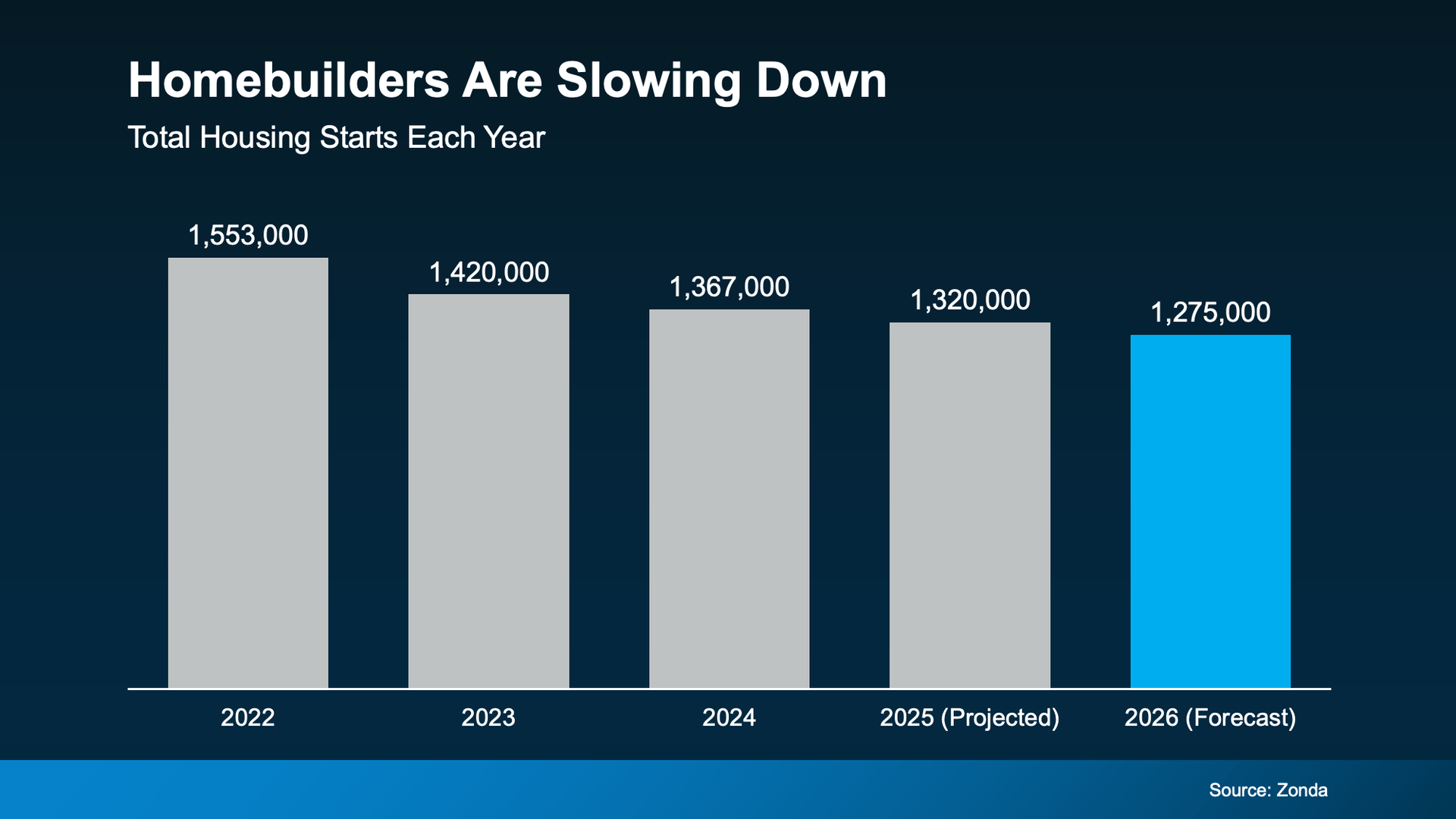
It’s a signal that the new inventory we have now may be your widest pool of all-new options for a while.


Today, Redfin says roughly 1 in 3 homes (27%) on the market are new builds. That’s higher than the norm, but the lowest share in four years. And it makes sense based on the graph above.


That means if you want more options to choose from, now’s the time to look.


And if you're wondering: why the pullback? It’s simple. Since there are already more new homes for sale than usual, builders want to focus on selling down the supply they already have on the market rather than adding more new homes. And that leads to point two.


2. Builder Incentives Just Hit an All-Time High


Here’s where things get even better for buyers. To make sure the inventory they have now keeps moving, builders are offering incentives at levels not seen in years – and many of those perks directly help buyers with affordability. Buyers today are getting:


  • Lower Prices: Builders are dropping the prices on their brand-new homes to draw in buyers.
  • Help with Closing Costs: Some builders are covering thousands of dollars in fees to reduce the upfront cost of buying.
  • Extra Upgrades: Think premium finishes, appliance packages, and designer features, all added at no extra cost.
  • Mortgage Rate Buydowns: This is when the builder pays to get you a lower mortgage rate, which reduces your monthly payments and helps with affordability.


But you don't have to be lucky to see these types of perks. The truth is, the vast majority of builders are offering advantages like these right now. According to the National Association of Homebuilders (NAHB) 65% of builders say they’re using some type of sales incentive and:


“. . . 41% of builders reported cutting prices in November, a record high in the post-Covid period and the first time this measure has passed 40%.”
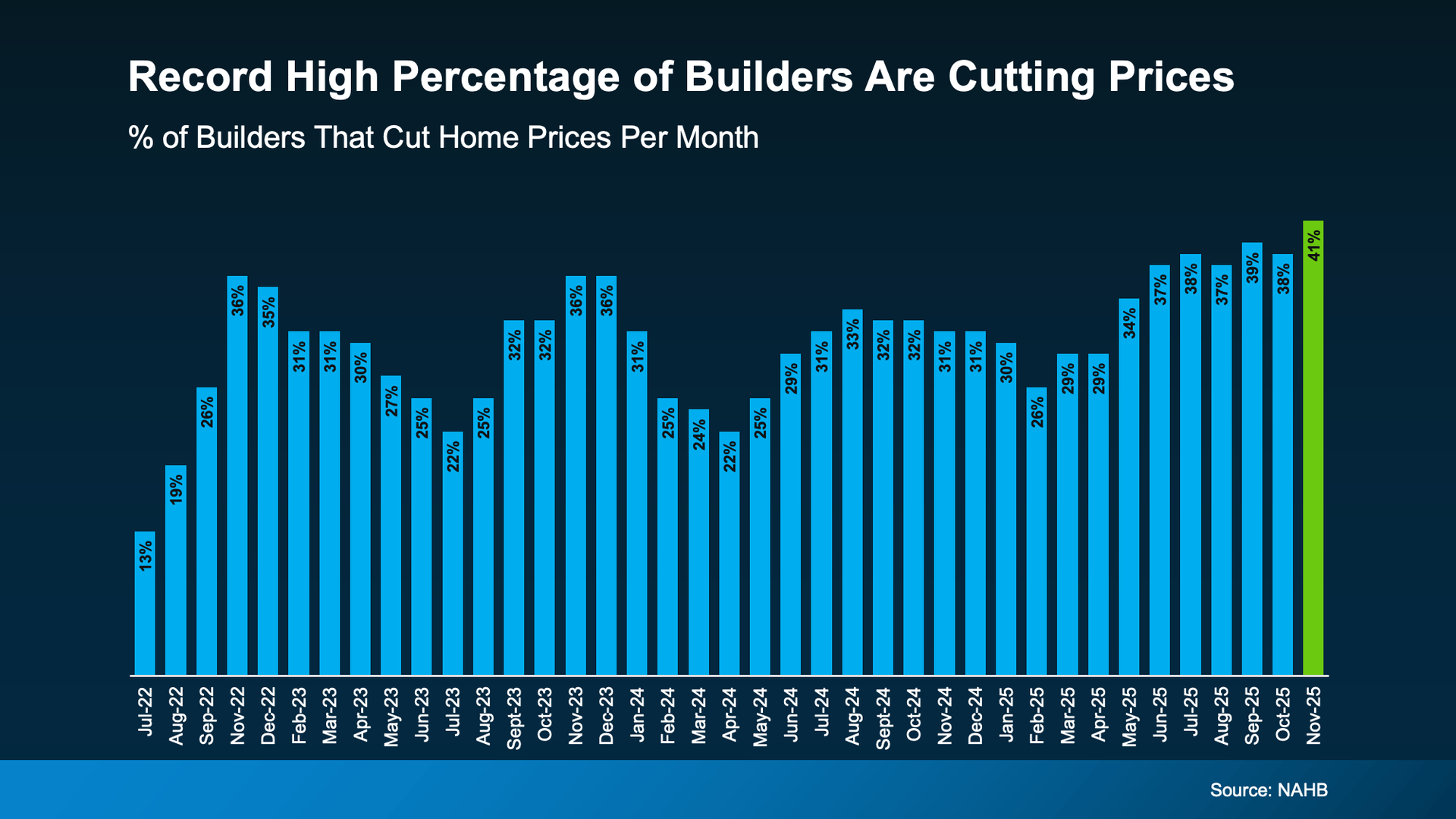
That’s a big deal. It shows how willing builders are to negotiate right now.


And if you look closely at the graph, you’ll notice the use of incentives typically falls in the early part of the year, as buyer demand rises going into the spring. So, you have an edge if you act now. This may be your ideal window to find the most options and better prices.


If you lean on me as your agent, we will be savvy about what you ask for, you could walk away with some of the best perks buyers have seen in years. And when every dollar counts and any incentive helps your bottom line, that's worth looking into. 


More options and more savings = an offer too good to pass up.


Bottom Line


With most builders offering generous incentives and a wider selection of new homes for sale, buyers may be looking at one of the best times in years to buy a new build.


Let's connect if you want to know which communities, builders, and incentives offer the most value today throughout Roseville, Rocklin, Lincoln, and Granite Bay. Having your own agent (not the builder’s representative) makes the sale and negotiation process that much easier for you.


If you could have a brand-new home for less than you may expect, would you be interested?
August 20, 2026
That spare room on the main floor. The finished basement with a kitchenette and its own entrance. The bonus room you've been using for storage. To you, it's extra space. But to a growing pool of buyers, it's the reason they'd pick your house . Here’s why. Multi-generational homebuying is on the rise. Millions of Families Are Living Multi-Generationally The number of multi-generational households is climbing. That’s when 3 or more generations live under one roof. And data shows those households grew from 3.2 million to almost 4 million between 2014 and 2024, according to Realtor.com . And each year, more people are shopping for a larger home that fits their combined needs. While the appetite for this type of house is rising across the board, data from USAFacts shows multi-generational living is more common in some states than others. The darker the state in the map below, the more common it is in that area ( see map below ): 
August 15, 2026
Imagine waiting a year to buy a home, only to find mortgage rates haven't changed much. That may sound frustrating.But it's a real possibility. A lot of people are putting their plans on hold because they believe much lower mortgage rates are right around the corner. But, based on today's forecasts, that may not happen. And you should know that before you decide what to do. Let's look at why experts don't expect a dramatic drop in rates – and the options that could help you buy anyway. Because even if rates don’t fall, you can still move. Here’s how. 1. Mortgage Rates Aren’t Expected To Fall in a Meaningful Way If you're waiting for rates to fall, you're not alone. A recent survey from Clever-Best Interest found 42% of people believe mortgage rates will drop below 5% this year. The challenge is, that's not what the experts who study mortgage rates every day are expecting. Forecasts from Fannie Mae , the Mortgage Bankers Association , and Wells Fargo all show mortgage rates staying relatively steady in the low-to-mid 6% range through at least mid-2027 ( see graph below ):
August 12, 2026
If you’re planning to buy your next home soon, you’ve probably heard the old rule about saving 20% for your down payment. The truth is, you usually don’t have to. Plenty of loan options let qualified buyers put down much less. But a lot of repeat buyers are choosing to put down 20% anyway. So, why are they if they don’t have to? Two reasons. They know a bigger down payment pays off, and after years in their current house, they’ve built up enough equity that it’s finally possible. Repeat Buyers Put More Money Down According to the National Association of Realtors (NAR), the typical repeat buyer puts down 23% when they buy a home ( see graph below ):
August 8, 2026
If buying a home is on your radar, you've probably been keeping an eye on mortgage rates and home prices . But don’t forget about homeowners insurance. Homeowners insurance has always been part of owning a home. But over the past few years, it's become a larger expense for many homeowners – something that's especially frustrating when affordability already feels tight. The good news? While premiums are still rising, the latest data shows those increases are beginning to slow. Here's what buyers should know. Home Insurance Costs Have Gone Up You've probably heard stories from friends or family about their premiums going up. And that’s not really a surprise when you consider data from the Pew Research Center shows 71% of homeowners say their insurance costs have gone up over the past few years. While no one likes rising costs, knowing what to expect can help you plan ahead. Your first insurance payment is typically included in your closing costs, but after that it'll become part of your monthly housing expenses. Getting an insurance quote early can help you build a more realistic budget and avoid surprises later. Premiums Are Rising, But Not as Fast as They Were Most of the headlines focus on how home insurance is getting more expensive. And that's true. But here’s the part that’s easy to miss. Insurance premiums are still rising. But they're not rising as fast as they were. According to the latest report from Rate Insurance , 2025 saw the first slowdown in annual premium increases since 2019 ( see graph below ):
August 4, 2026
If you're a homeowner getting ready to move , one question usually comes first: should you buy your next home before you sell, or sell your current house before you start looking? There's no single right answer. The best call depends on your finances, your local market, and your timeline. And a trusted agent can help you weigh all of it. But in a lot of cases these days, selling first puts you in the stronger spot. The Advantages of Selling First Selling is usually the trickier half of a move today, so getting it done first clears your biggest hurdle. And that’s especially true right now , because there are more homes for sale than there are buyers, which means houses are taking longer to sell than they did a year or two ago. So how does leading with your sale pay off? Let’s start with the money. 1. You Won’t Get Stuck Paying Two Mortgages Buy before you sell, and you could end up carrying two mortgages at once. Houses are staying on the market longer these days, that overlap may drag on for more time than you’d planned. And if unexpected repairs come up, it could get even more expensive. Plus, you need to have the financial ability to qualify to carry both homes at the same time. Selling first takes that risk off the table, so you’re not multitasking homeownership. As Ramsey Solutions puts it: "It's best to sell your old home before buying a new one to avoid unnecessary risks and possible headaches." 2. You Can Use Your Equity To Fuel Your Move This is always true, but one of the biggest perks of selling first is that you’ll know exactly how much money you're walking away with. And one of the big figures that matters in that conversation is how much equity you have in your current place. Equity is basically your house’s value minus what you still owe on your mortgage. And it adds up fast. According to Realtor.com , homeowners who’ve been in their home for 5 years have about $180,000 in equity on average. And those who’ve had their home for 6-10 years? They have over $340,000. After you sell, you can use that money to cover your down payment or even buy your next home in cash. And knowing that profit up front helps you plan your next move. 3. Your Offer Will Be Hard To Pass Up When your house is already sold, you don’t have to make your offer contingent on that sale. In a market where buyers are taking their time, that’s exactly what a seller wants to see. Picture it from the seller’s side. If their house has been sitting for a while, they’ll gravitate toward the offer most likely to close without a snag. That can also give you room to ask for a little more, like repairs, since a motivated seller would rather keep things moving than lose you and wait for another offer to come in. Your agent can help you make the most of your upper hand in that scenario. Is There a Catch? Selling first has its tradeoffs too, and it helps to see the pros and cons side by side before you decide. Here’s a quick breakdown based on information from Zillow ( see visual below ):
July 31, 2026
Remember how exciting it was to buy your first place? It felt like crossing a long-awaited finish line. It gave you a place to build your life. Maybe it’s where you lived when you got married. Or where you welcomed a child or a pet into the family. But that was just the beginning. For most people, your first house was never meant to be your forever home. It’s a stepping stone for what comes next. And if your life looks different today than it did when you got the keys, you’re not stuck. Moving may be more realistic than you think. Starter Home Inventory Is Still Relatively Low If you've been wondering whether now is the right time to move up, here's something worth knowing. Starter homes remain one of the hardest types of homes to find. And that's good news if you're thinking about selling your first place. Historically, we haven’t been building enough homes for first-time buyers. And even though homebuilders have shifted more attention toward smaller, entry-level homes lately, the Census shows there’s a long way to go to re-build supply ( see graph below ): 
July 28, 2026
If you own a luxury house, you're in a stronger spot than most sellers right now. While much of the market has cooled, the high-end tier hasn't. Sale prices and buyer demand are both up. So if you're considering selling, now could be a great time to make your move. Luxury Is Leading on Price Let’s start with prices . But before we get into it – what actually counts as a luxury home? Generally, these are homes in the top 5% price range for the area, so it varies depending on where you live, and what part of the country. But what’s interesting is that according to the latest data from Redfin , sale prices for luxury houses have risen about three times faster than for non-luxury. Right now, the typical home’s sale price is up about 1.5% year-over-year. But high-end homes? Their sale prices have gone up nearly 5% since last year ( see graph below ): 
July 25, 2026
Quick gut reaction. Which investment do Americans trust more than stocks, gold, savings accounts, and bonds? The answer hasn't changed in 14 years. It's real estate. And this year, that answer comes with even more conviction behind it. New data shows people aren't just saying homeownership is a smart move, they're feeling better about it than they have in years. Let's dig into why. Real Estate Takes the Top Spot – Again Every year, Gallup asks Americans to name the best long-term investment. And for the 14th year in a row, real estate came out on top ( see graph below ):
July 21, 2026
If you’ve thought about buying a home in the past few years, you may have run into two frustrations: asking prices that kept climbing and too few homes to choose from. In many places, both sticking points are letting up this summer, with lower asking prices and more homes for sale. Let’s look at the trends, and what they mean for your search. Sellers Are Pricing To Attract Buyers According to Realtor.com , the national median asking price was $430,000 in June, nearly $11,000 under what it was the year before ( see graph below ):
July 10, 2026
Saving for a down payment can feel like the hardest part of buying a home. And with affordability as tight as it’s been lately, it’s fair to wonder how anyone manages it right now. Here’s something you may not have seen coming.  Some people are getting their foot in the door with a smaller down payment. According to Realtor.com, the typical buyer put down about $23,400 in early 2026 – that's around $5,000 below what was typical the year before (a 19% drop year over year). That’s the lowest down payments have been since 2021 (see graph below):
Show More
August 20, 2026
That spare room on the main floor. The finished basement with a kitchenette and its own entrance. The bonus room you've been using for storage. To you, it's extra space. But to a growing pool of buyers, it's the reason they'd pick your house . Here’s why. Multi-generational homebuying is on the rise. Millions of Families Are Living Multi-Generationally The number of multi-generational households is climbing. That’s when 3 or more generations live under one roof. And data shows those households grew from 3.2 million to almost 4 million between 2014 and 2024, according to Realtor.com . And each year, more people are shopping for a larger home that fits their combined needs. While the appetite for this type of house is rising across the board, data from USAFacts shows multi-generational living is more common in some states than others. The darker the state in the map below, the more common it is in that area ( see map below ): 
August 15, 2026
Imagine waiting a year to buy a home, only to find mortgage rates haven't changed much. That may sound frustrating.But it's a real possibility. A lot of people are putting their plans on hold because they believe much lower mortgage rates are right around the corner. But, based on today's forecasts, that may not happen. And you should know that before you decide what to do. Let's look at why experts don't expect a dramatic drop in rates – and the options that could help you buy anyway. Because even if rates don’t fall, you can still move. Here’s how. 1. Mortgage Rates Aren’t Expected To Fall in a Meaningful Way If you're waiting for rates to fall, you're not alone. A recent survey from Clever-Best Interest found 42% of people believe mortgage rates will drop below 5% this year. The challenge is, that's not what the experts who study mortgage rates every day are expecting. Forecasts from Fannie Mae , the Mortgage Bankers Association , and Wells Fargo all show mortgage rates staying relatively steady in the low-to-mid 6% range through at least mid-2027 ( see graph below ):
August 12, 2026
If you’re planning to buy your next home soon, you’ve probably heard the old rule about saving 20% for your down payment. The truth is, you usually don’t have to. Plenty of loan options let qualified buyers put down much less. But a lot of repeat buyers are choosing to put down 20% anyway. So, why are they if they don’t have to? Two reasons. They know a bigger down payment pays off, and after years in their current house, they’ve built up enough equity that it’s finally possible. Repeat Buyers Put More Money Down According to the National Association of Realtors (NAR), the typical repeat buyer puts down 23% when they buy a home ( see graph below ):
August 8, 2026
If buying a home is on your radar, you've probably been keeping an eye on mortgage rates and home prices . But don’t forget about homeowners insurance. Homeowners insurance has always been part of owning a home. But over the past few years, it's become a larger expense for many homeowners – something that's especially frustrating when affordability already feels tight. The good news? While premiums are still rising, the latest data shows those increases are beginning to slow. Here's what buyers should know. Home Insurance Costs Have Gone Up You've probably heard stories from friends or family about their premiums going up. And that’s not really a surprise when you consider data from the Pew Research Center shows 71% of homeowners say their insurance costs have gone up over the past few years. While no one likes rising costs, knowing what to expect can help you plan ahead. Your first insurance payment is typically included in your closing costs, but after that it'll become part of your monthly housing expenses. Getting an insurance quote early can help you build a more realistic budget and avoid surprises later. Premiums Are Rising, But Not as Fast as They Were Most of the headlines focus on how home insurance is getting more expensive. And that's true. But here’s the part that’s easy to miss. Insurance premiums are still rising. But they're not rising as fast as they were. According to the latest report from Rate Insurance , 2025 saw the first slowdown in annual premium increases since 2019 ( see graph below ):
August 4, 2026
If you're a homeowner getting ready to move , one question usually comes first: should you buy your next home before you sell, or sell your current house before you start looking? There's no single right answer. The best call depends on your finances, your local market, and your timeline. And a trusted agent can help you weigh all of it. But in a lot of cases these days, selling first puts you in the stronger spot. The Advantages of Selling First Selling is usually the trickier half of a move today, so getting it done first clears your biggest hurdle. And that’s especially true right now , because there are more homes for sale than there are buyers, which means houses are taking longer to sell than they did a year or two ago. So how does leading with your sale pay off? Let’s start with the money. 1. You Won’t Get Stuck Paying Two Mortgages Buy before you sell, and you could end up carrying two mortgages at once. Houses are staying on the market longer these days, that overlap may drag on for more time than you’d planned. And if unexpected repairs come up, it could get even more expensive. Plus, you need to have the financial ability to qualify to carry both homes at the same time. Selling first takes that risk off the table, so you’re not multitasking homeownership. As Ramsey Solutions puts it: "It's best to sell your old home before buying a new one to avoid unnecessary risks and possible headaches." 2. You Can Use Your Equity To Fuel Your Move This is always true, but one of the biggest perks of selling first is that you’ll know exactly how much money you're walking away with. And one of the big figures that matters in that conversation is how much equity you have in your current place. Equity is basically your house’s value minus what you still owe on your mortgage. And it adds up fast. According to Realtor.com , homeowners who’ve been in their home for 5 years have about $180,000 in equity on average. And those who’ve had their home for 6-10 years? They have over $340,000. After you sell, you can use that money to cover your down payment or even buy your next home in cash. And knowing that profit up front helps you plan your next move. 3. Your Offer Will Be Hard To Pass Up When your house is already sold, you don’t have to make your offer contingent on that sale. In a market where buyers are taking their time, that’s exactly what a seller wants to see. Picture it from the seller’s side. If their house has been sitting for a while, they’ll gravitate toward the offer most likely to close without a snag. That can also give you room to ask for a little more, like repairs, since a motivated seller would rather keep things moving than lose you and wait for another offer to come in. Your agent can help you make the most of your upper hand in that scenario. Is There a Catch? Selling first has its tradeoffs too, and it helps to see the pros and cons side by side before you decide. Here’s a quick breakdown based on information from Zillow ( see visual below ):
July 31, 2026
Remember how exciting it was to buy your first place? It felt like crossing a long-awaited finish line. It gave you a place to build your life. Maybe it’s where you lived when you got married. Or where you welcomed a child or a pet into the family. But that was just the beginning. For most people, your first house was never meant to be your forever home. It’s a stepping stone for what comes next. And if your life looks different today than it did when you got the keys, you’re not stuck. Moving may be more realistic than you think. Starter Home Inventory Is Still Relatively Low If you've been wondering whether now is the right time to move up, here's something worth knowing. Starter homes remain one of the hardest types of homes to find. And that's good news if you're thinking about selling your first place. Historically, we haven’t been building enough homes for first-time buyers. And even though homebuilders have shifted more attention toward smaller, entry-level homes lately, the Census shows there’s a long way to go to re-build supply ( see graph below ): 
July 28, 2026
If you own a luxury house, you're in a stronger spot than most sellers right now. While much of the market has cooled, the high-end tier hasn't. Sale prices and buyer demand are both up. So if you're considering selling, now could be a great time to make your move. Luxury Is Leading on Price Let’s start with prices . But before we get into it – what actually counts as a luxury home? Generally, these are homes in the top 5% price range for the area, so it varies depending on where you live, and what part of the country. But what’s interesting is that according to the latest data from Redfin , sale prices for luxury houses have risen about three times faster than for non-luxury. Right now, the typical home’s sale price is up about 1.5% year-over-year. But high-end homes? Their sale prices have gone up nearly 5% since last year ( see graph below ): 
July 25, 2026
Quick gut reaction. Which investment do Americans trust more than stocks, gold, savings accounts, and bonds? The answer hasn't changed in 14 years. It's real estate. And this year, that answer comes with even more conviction behind it. New data shows people aren't just saying homeownership is a smart move, they're feeling better about it than they have in years. Let's dig into why. Real Estate Takes the Top Spot – Again Every year, Gallup asks Americans to name the best long-term investment. And for the 14th year in a row, real estate came out on top ( see graph below ):
July 21, 2026
If you’ve thought about buying a home in the past few years, you may have run into two frustrations: asking prices that kept climbing and too few homes to choose from. In many places, both sticking points are letting up this summer, with lower asking prices and more homes for sale. Let’s look at the trends, and what they mean for your search. Sellers Are Pricing To Attract Buyers According to Realtor.com , the national median asking price was $430,000 in June, nearly $11,000 under what it was the year before ( see graph below ):
July 10, 2026
Saving for a down payment can feel like the hardest part of buying a home. And with affordability as tight as it’s been lately, it’s fair to wonder how anyone manages it right now. Here’s something you may not have seen coming.  Some people are getting their foot in the door with a smaller down payment. According to Realtor.com, the typical buyer put down about $23,400 in early 2026 – that's around $5,000 below what was typical the year before (a 19% drop year over year). That’s the lowest down payments have been since 2021 (see graph below):
Show More